
Mangiando all'italiano
Italy's heritage at the table

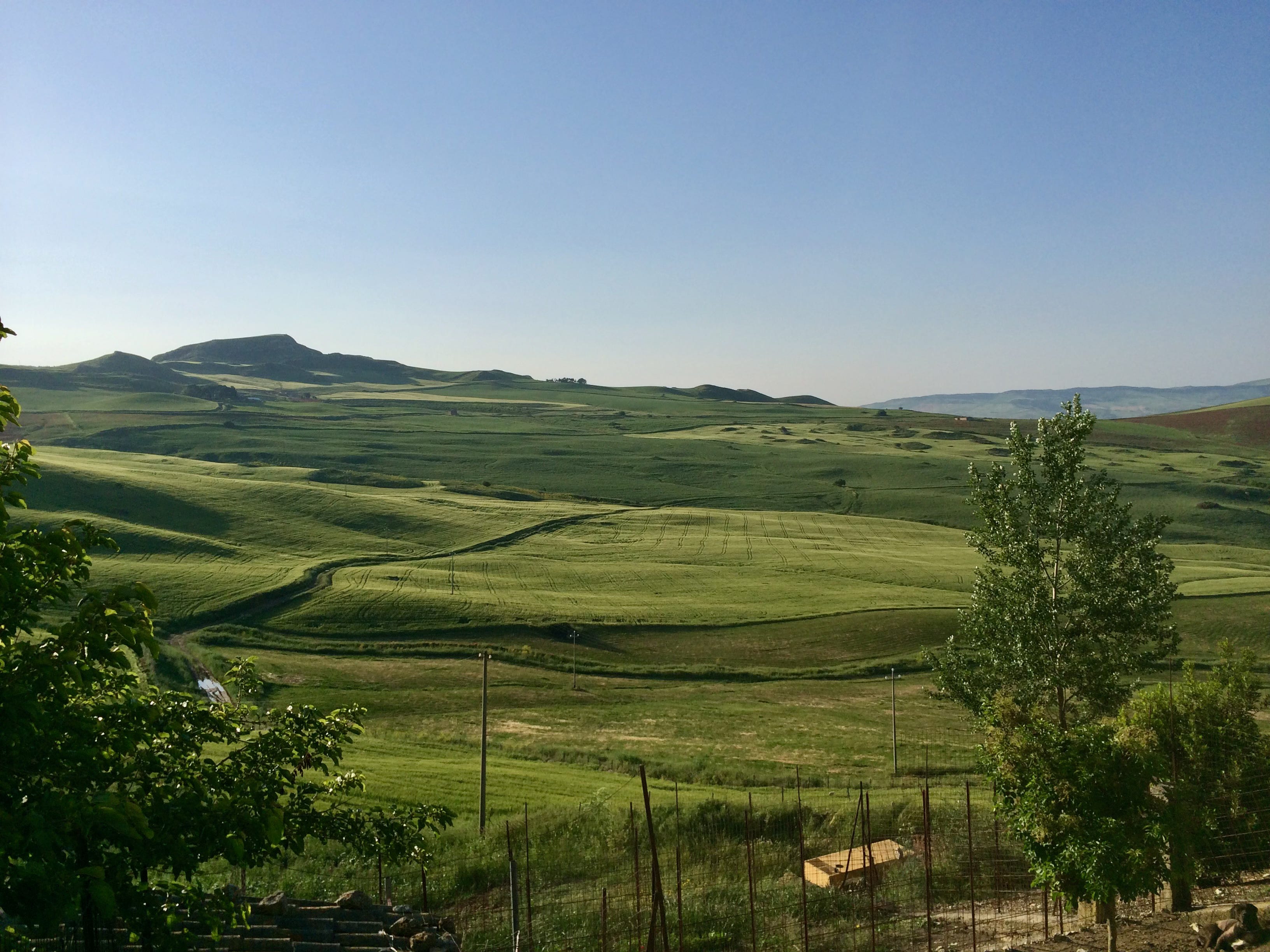
Please indicate you like this by tapping the heart above the photo in the upper left, thanks!
Italy is bubbling over with self-congratulatory joy, and not just because of the holiday season. The explanation, ICYMI, was in The Guardian, December 10, 2025: “Unesco has officially recognized Italian cooking as a cultural beacon, an endorsement hailed by the far-right prime minister, Giorgia Meloni, whose government has put the country’s food at the heart of its nationalistic expression of identity.”
Pardon me for being a grinch, but I have to say that’s good news and bad news.
Good news when this distinguished body recognizes that a cuisine, any cuisine, whether of a country, a region, a culture, a tribe, or something else, is worthy of recognition.
Bad news to have Italian cuisine weighed down by a nationalist agenda. If you don’t eat what I eat, you’re not Italian, is what the prime minister claims in effect. Makes me wonder what Eccellenza Meloni had for dinner last night.
But for anyone who knows Italy even a little bit, in fact for anyone who may have traveled more than a week or ten days in the country, the inevitable question is: Which cuisine exactly are we talking about?
Italy, from the Alps to the heel, to the toe, and to the several islands, is a landscape of many regions, twenty in fact, each one distinctive for its cuisine, its language, and a few other cultural artefacts. And each one divided into innumerable provinces. Venetians speak vèneto to each other while Sicilians speak sicilianu. (According to linguists these are not dialects but recognizable languages, with their own grammatical structures.) But when Venetians speak to Sicilians, they converse in Italian because the two regional languages are not mutually comprehensible. Just so with the cuisine. A cichetto of baccalà mantecato (creamy salt cod mounted on a disc of toasted bread or fried polenta) taken with a glass of prosecco at 11 o’clock in the morning at a stand-up bar in a Venetian back alley near the fish market is as typical of Venice as a hearty pane co’ meusa (a robust spleen sandwich, softened with thickly dripping gravy) is of Palermo, especially if it’s offered from a stall in the narrow streets around Palermo’s dock area after a night of carousing. And try as you might, you will never find baccalà mantecato in Palermo nor will you find pane co’ meusa in Venice.
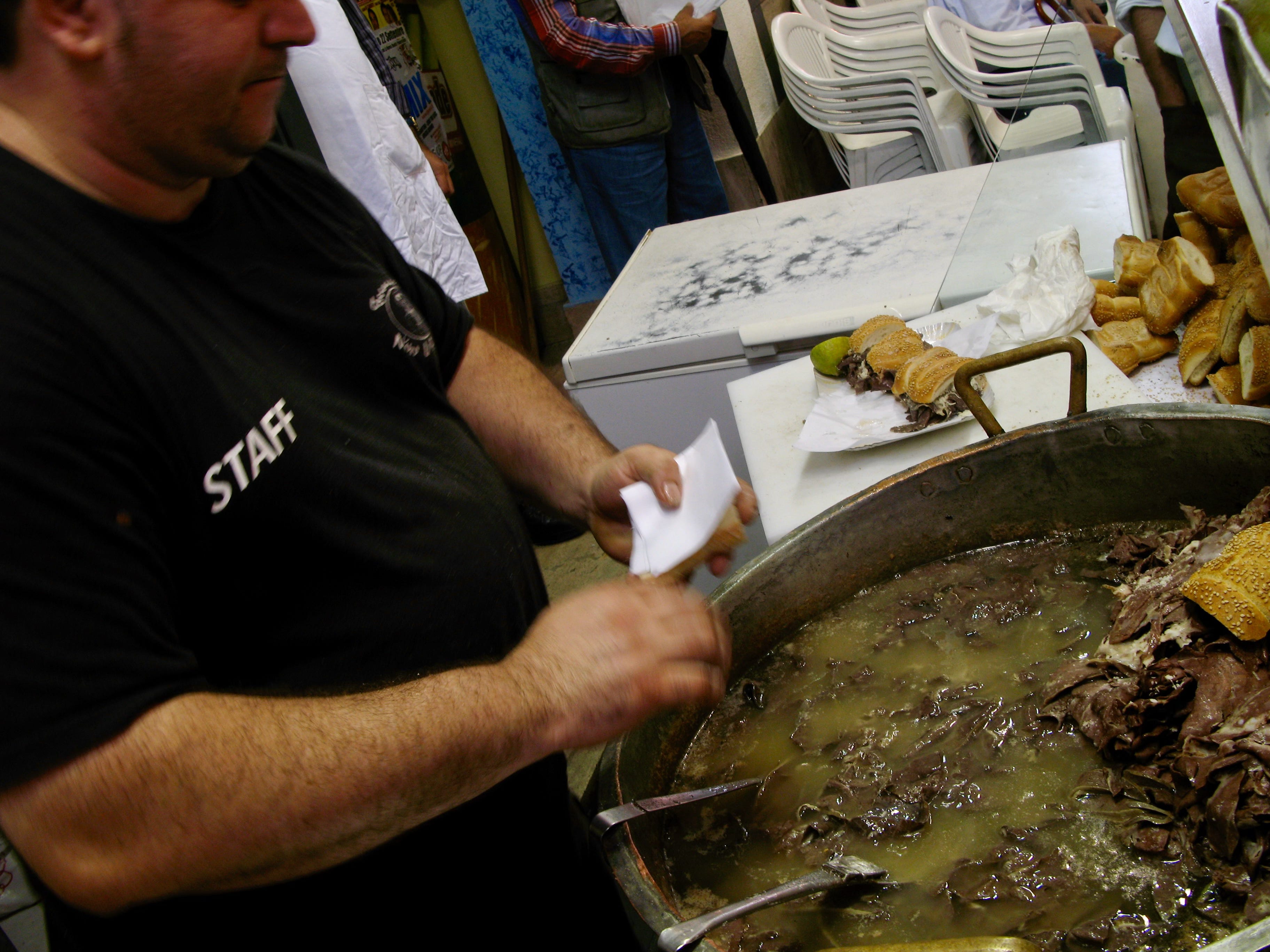
To be fair, the UNESCO designation goes way beyond a series of recipes for specific dishes (think carbonara, tiramisù, mozzarella in carozza, lasagna al ragù, parmigiana di melanzane, spaghetti alle vongole, e via dicendo) to embrace an all-reaching idea of what makes food in Italy so important that it deserves international recognition. In fact, we should be speaking not so much of food in Italy as of eating in Italy. The citation goes on:
“It is a communal activity that emphasizes intimacy with food, respect for ingredients and shared moments around the table … People of all ages and genders participate, exchanging recipes, suggestions and stories, with grandparents often passing down traditional dishes to their grandchildren.”
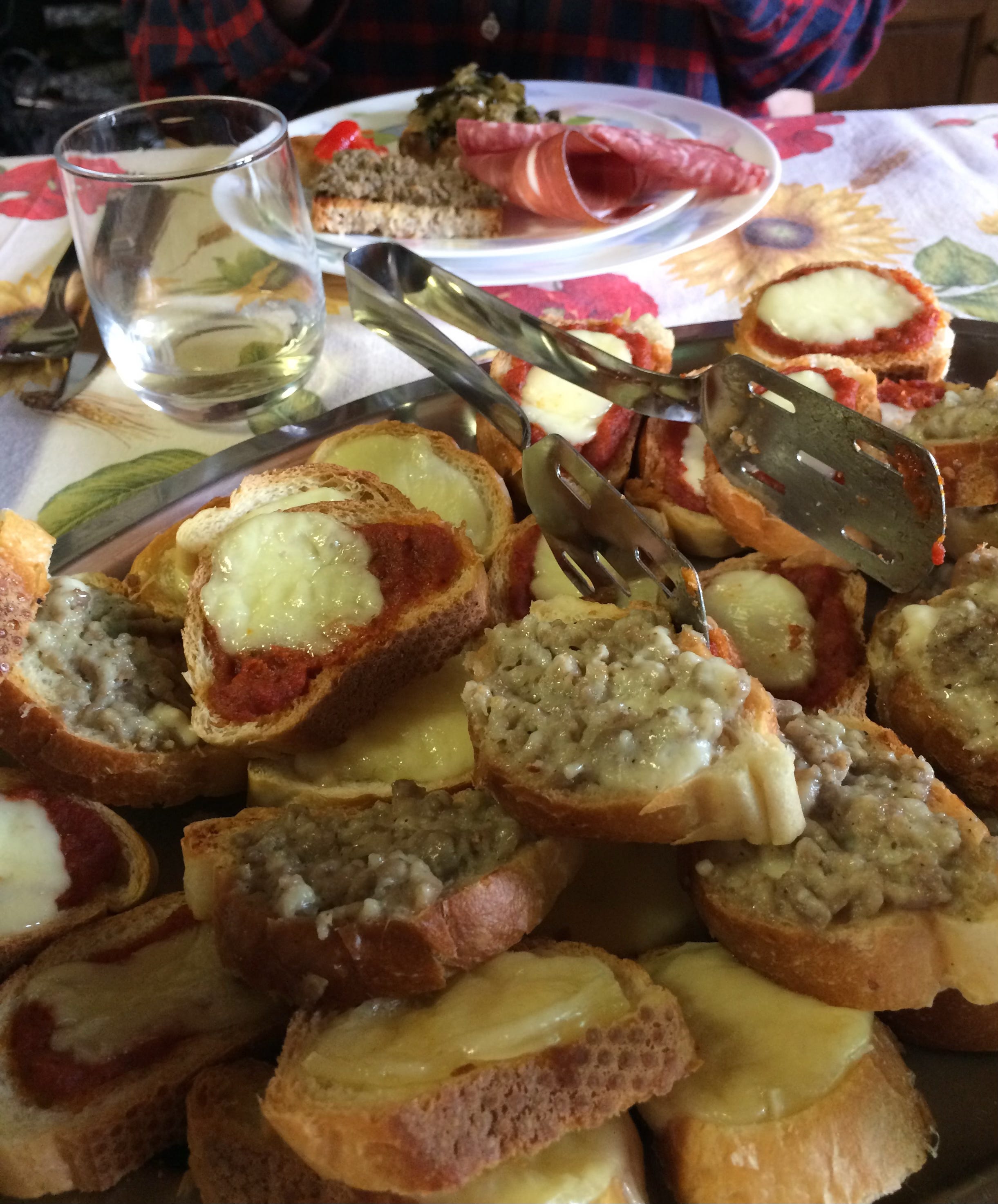
So, we could say, it’s a way of thinking about food, from beginning to end, and it really begins long before the kitchen or the table. It begins out there in the fields, the vineyards, the olive groves, the steep mountain pastures where sheep graze, the woodlands where wild mushrooms grow, the long long coastline where fishers cast their nets, it begins in fact with Italy’s amazing landscape that has been shaped and nourished and carefully tended by humans since the beginning of history.
In more than a half-century of experience in the country, I’ve found a simple truth, that Italians care more about their food than almost any other culture or country I’ve known, and certainly a great deal more than most Americans. From toddlers to grandparents, Italians are acutely aware of what they’re eating at any moment and why it tastes good. Or not. That’s why, as we stranieri like to point out, they spend most of their time at the table talking about the meal they’re eating, comparing it to the meal they ate last, and planning the meal they’ll eat next. That’s a joke but, like many jokes, it’s a gloss on the truth.
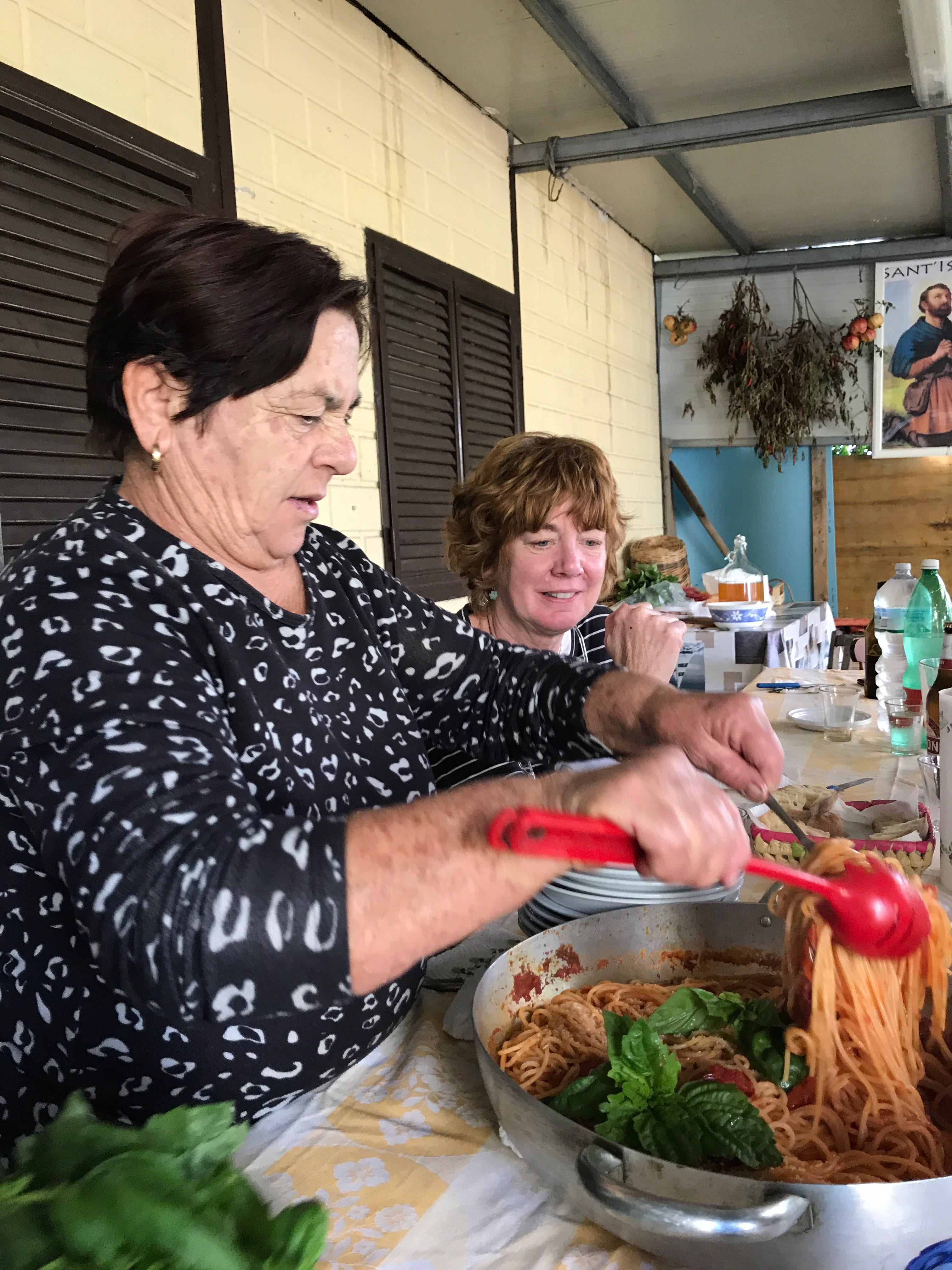
In Italy no matter where you are, in a kitchen, in a market, in a restaurant, a winery or a caffè or a neighborhood alimentari (food shop), the highest praise you can give to anything you put in your mouth is that it’s genuino. Which doesn’t mean genuine so much as it means authentic, honest, true, unadulterated, the real thing. A wine that’s genuino has not been adulterated with added sugars or flavor-boosting yeasts: “È buono,” the wine steward might say critically of a wine from Germany, perhaps, or California: “Ma non è genuino.” Meaning, it’s pretty good but it would be really good if it hadn’t had all that mickeymouse stuff added to it. And you can say that about olive oil as much as about a plate of pasta. Or vegetables. Or beans.
I recall a meal shared one late autumn in a restaurant in Cortona with friends from Arezzo. We were served deep bowls of acquacotta (the name means cooked water), a sort of fundamental soup that is deeply traditional throughout Tuscany in many slightly different versions. Basically, it’s bread soup with plenty of onions and other vegetables, garnished with good olive oil. The version in Cortona came with a welcome plenitude of thickly sliced wild porcini mushrooms. “Delicious,” my visitors from Arezzo murmured, “but of course it’s not acquacotta. It’s mushroom soup!”
Acquacotta, you see, in the Aretine view, should not contain mushrooms, no matter how delicious.
Equally, Rosalba, a cook in Siracusa, making a traditional Sicilian caponata, listened in utter disbelief as I told her of another cook, Concetta in Catania who, like most cooks in that town, added a dash of bitter chocolate to the succulent mix of eggplant and tomatoes in a sweet-sour sauce. A mere 42 miles (67 kilometers) separate the two towns, yet more than that divides their kitchens.
The problem, for people like our UNESCO colleagues trying to define Italian food, is that there really is no such thing. One learns very quickly that the ragù made to sauce the pasta in one village is different from the way it’s made in a neighboring village. Maybe only slightly so but that, as Frost said, makes all the difference. Our way is genuino; their way over there in the next town is hopelessly contaminated. Sofisticato, is the term used and, like genuino, the meaning is not the obvious one. It means adulterated, precisely. Possibly, like that acquacotta, adulterated with wild porcini mushrooms, or like that caponata, with a dash of bitter chocolate. “Delizioso, ma non è genuino!”
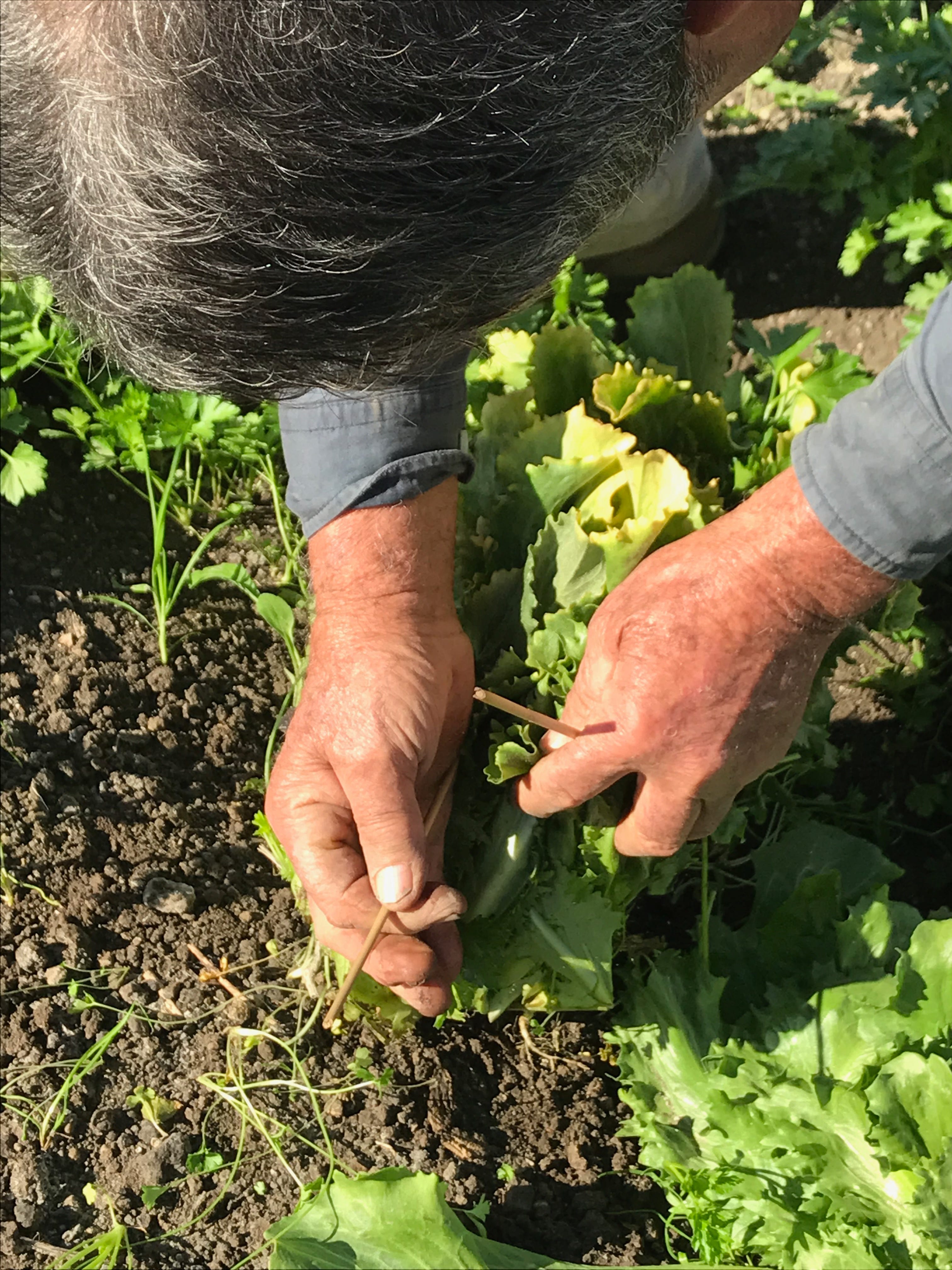
Another part of understanding the Italian relationship to food is understanding the attachment to the land and to country ways, even among people in the heart of the heart of cities. In Rome, back in the day (I don’t know if this is still true), the city was dotted with little markets that filled the smaller squares across the town, like piazza della Pace, where I shopped daily. The vendors, while they got lots of produce from the mercati generali, the wholesale houses, also brought in produce from the market gardens that surrounded the ancient city and offered some of the finest local, seasonal fruits and vegetables. Roman artichokes, Roman puntarelle (a bitter chicory green particular to the region), Roman fava beans and strawberries and agretti greens and so much else, were all considered treasures to be cherished like jewels that renewed themselves annually.
All this is changing, of course, as it is around the world. Old traditions die off, as they always have, and new, less desirable ones take their place. More and more supermarkets, with their conveniences, have invaded the space once occupied by local food shops. In my Tuscan town I’ve watched as the Saturday market, once a beacon attracting vendors and customers from all the villages around us, has shrunk over the decades to perhaps a third of its former space. The locally owned shops, the bakeries, the pastry emporia, the butchers, the fruttivendolo (greengrocers) have disappeared, one by one, and been replaced by bars and eating places (some quite good) that cater mostly to tourists, as well as elegant boutiques selling tourist desirables, cashmere, lace, antiques, much of it priced beyond the reach of local residents.
At the same time, where once local shoppers had access to a wide range of prepared foods, prepared on site, that is, delicate spinach gnocchi, individual baked lasagnas, hefty slices of porchetta or a skewer of pork livers called fegatelli, salt cod with potatoes on Fridays, stewed tripe on Saturdays, pasta e fagioli almost any day of the week, things a busy housewife had no time to make at home, now a lot of that need is filled by frozen or, worse yet, ultra-processed food. One of the most disheartening sections of our local supermarket is the aisle devoted to snack foods for children. Here a harried mother can pick up individual packs, one for each child for each day of the week, of the kind of high-fat, high-sodium, highly sweetened and chemically stabilized junk that Americans are accustomed to. Gone are the slabs of country bread with a smear of ricotta or tomato paste or even Nutella that kids used to get.
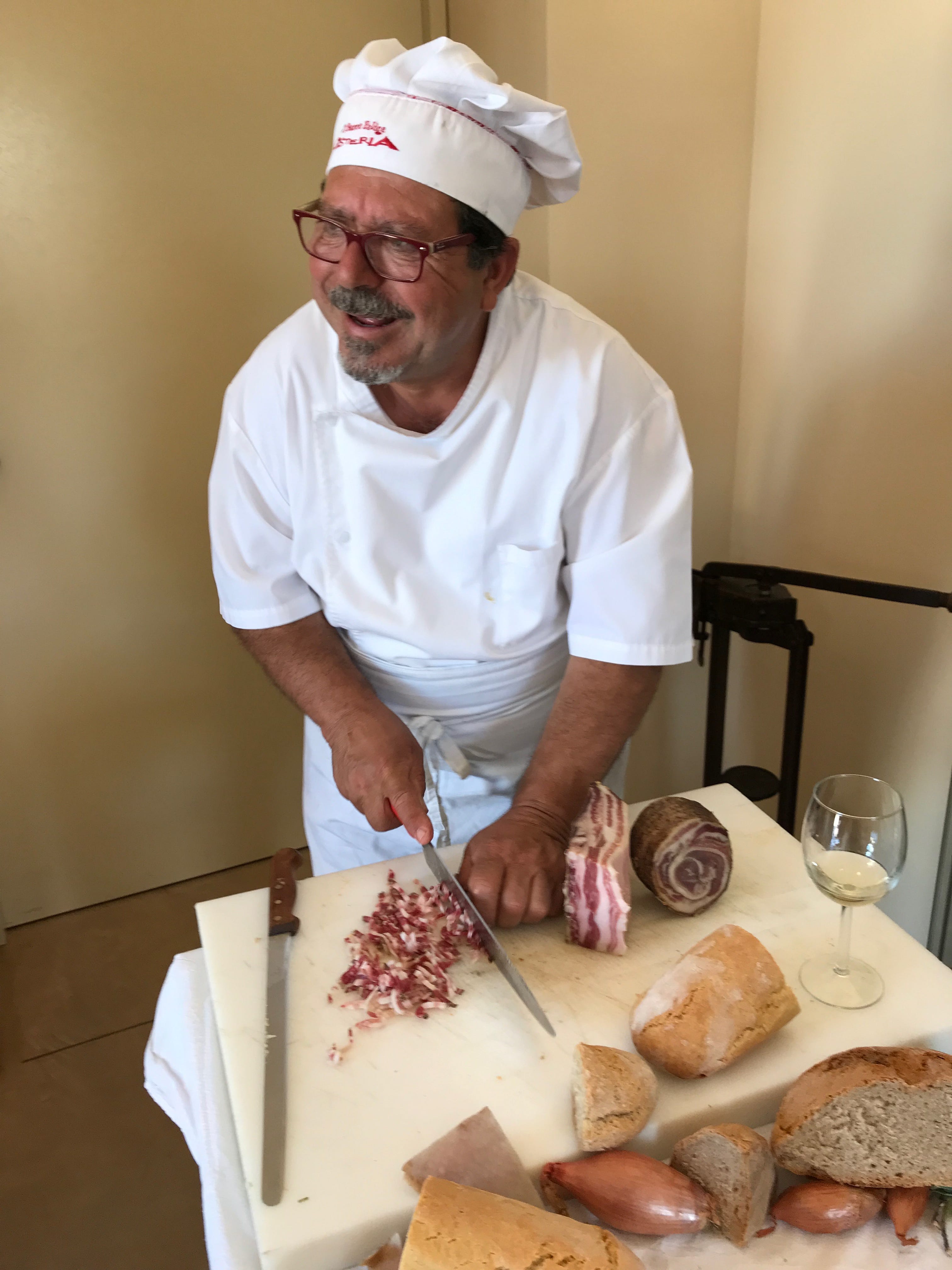
So it’s not, pace UNESCO and the celebrating Italians, a universal truth that Italian food, as it exists today, is an “Intangible Cultural Heritage.” It’s the intangible part that I would dispute. In fact, I would hazard a guess that this kind of recognition (this kind??? this is unique, at least so far) often comes along, like a Slow Food commendation, just at the point when a product, a method, a whole way of life, is in danger of disappearing.
But, speaking as an American, there is still so very much for us to learn from Italians and the ways they grow and harvest and process and cook and serve and share their food. The most important lesson is to pay attention. Pay attention to what you eat, pay attention to how it’s cooked, pay attention to where it came from and how it got to your table.
And set aside time to enjoy a meal, with family, with friends, with strangers, or on your own. Stop scrolling while you eat.
Above all, remember, a tavola non s’invecchia mai.
My mouth waters reading this. I so love all the ways Italians bring their best food game to the tavola no matter where they live. Always served with pride of place and ingredients. Love Italy on so many levels. I'm grateful for my Sicilian family that prepared the way for me.
Lovely article and so true, thank you. Your story about Acquacotta reminded me of a visit to Massa Maritima in Tuscany with an Italian friend a few years ago. Come lunchtime she insisted on inspecting the menus of what seemed to me to be every ristorante and trattoria in the centro storico until we eventually found one which passed muster.
And what did she order for each of us? A bowl of what seemed to me in my ignorance to be hot water with some herbs and an egg in it. Genuino indeed.
The wine was good though.