
[COPY] Farmer-Miller-Baker-Bread: Connecting the table to the land in Maine

Please tap that little heart in the upper left corner if you like this post. And thanks for your support!
The Kneading Conference (see below) is coming up in just about a month’s time so I’m reposting this year-old account for all you eager bakers, bread-lovers, grain mavens, and others en route to Maine—get ready for a full-throated, yeasty experience. See more about the Kneading Conference below—I hope to run into you in Skowhegan.
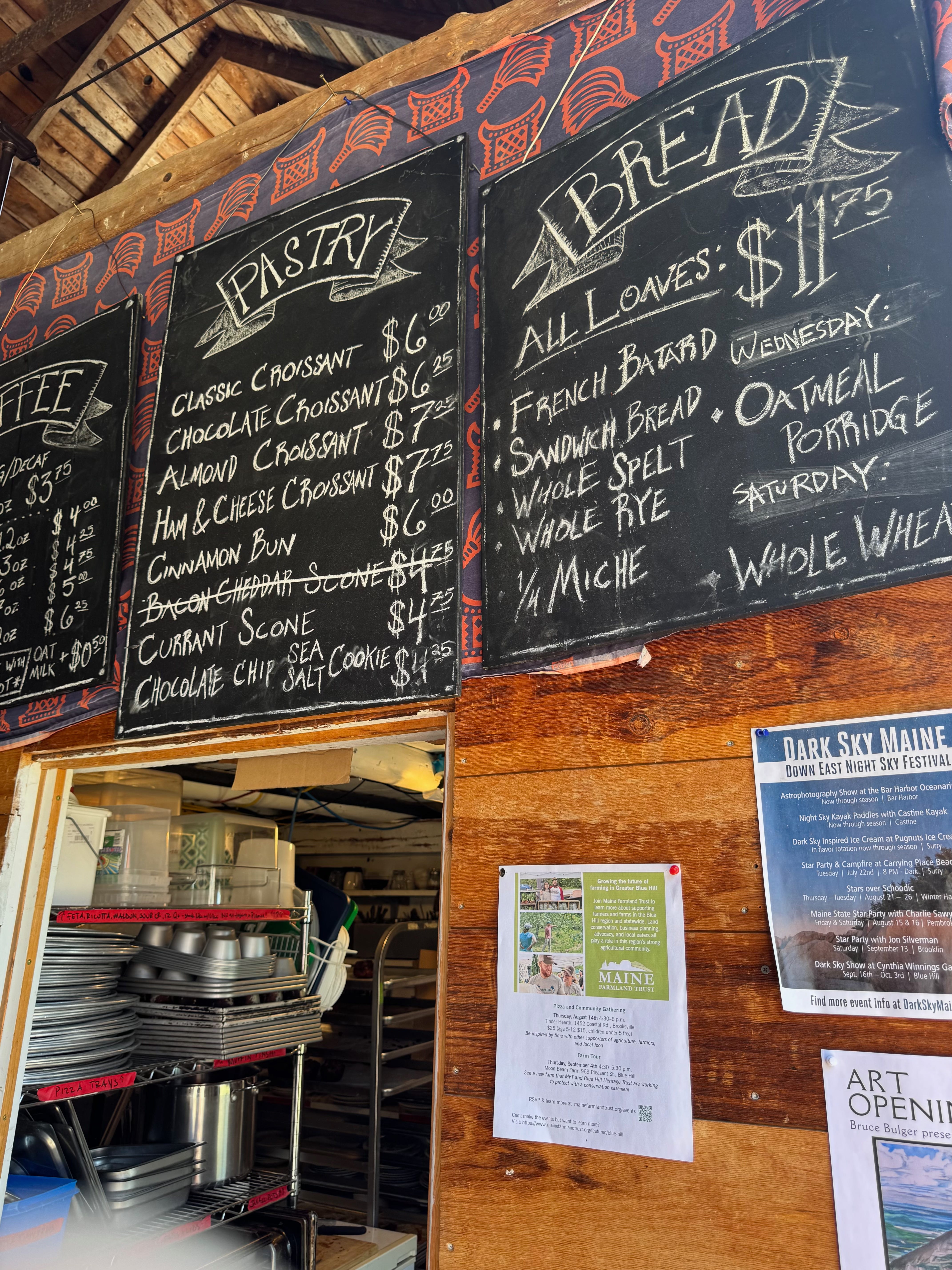
LAST Saturday I spent a good 40 minutes in line in the hot late-August sunshine, shuffling slowly forward to buy a loaf of bread. And I was not in Soviet Russia or war-torn Syria—I was right at home in Downeast Maine.
Tinder Hearth
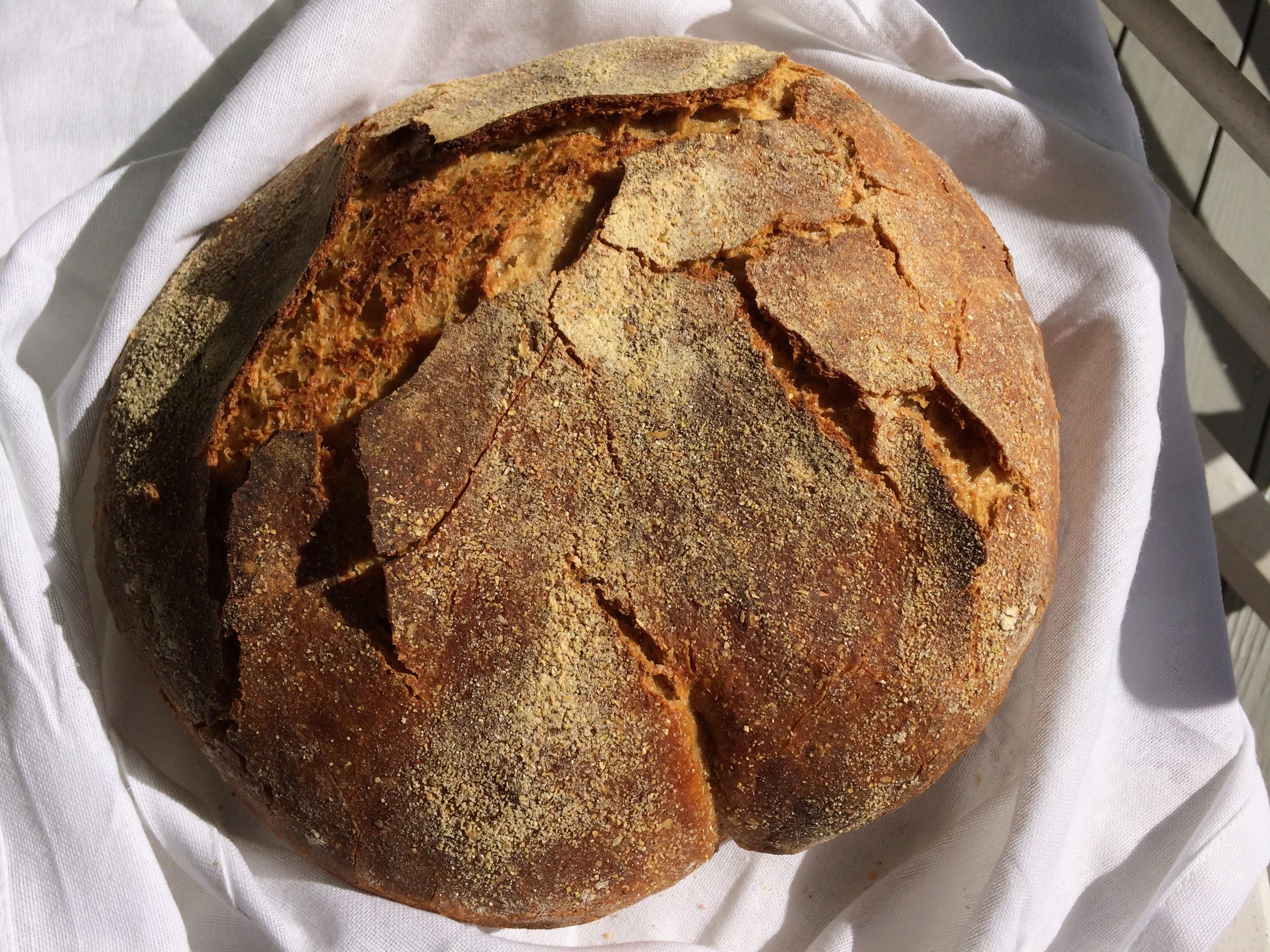
It was not just any bread, mind you. It was the beautifully grainy, crusty, tasty, textured, naturally leavened, wood-oven baked, whole-grain bread from a bakery called Tinder Hearth, well off the beaten path (but discovered long since by the teeming hordes who joined me in line) in a remote spot above Wasson Cove at the far eastern edge of Penobscot Bay.
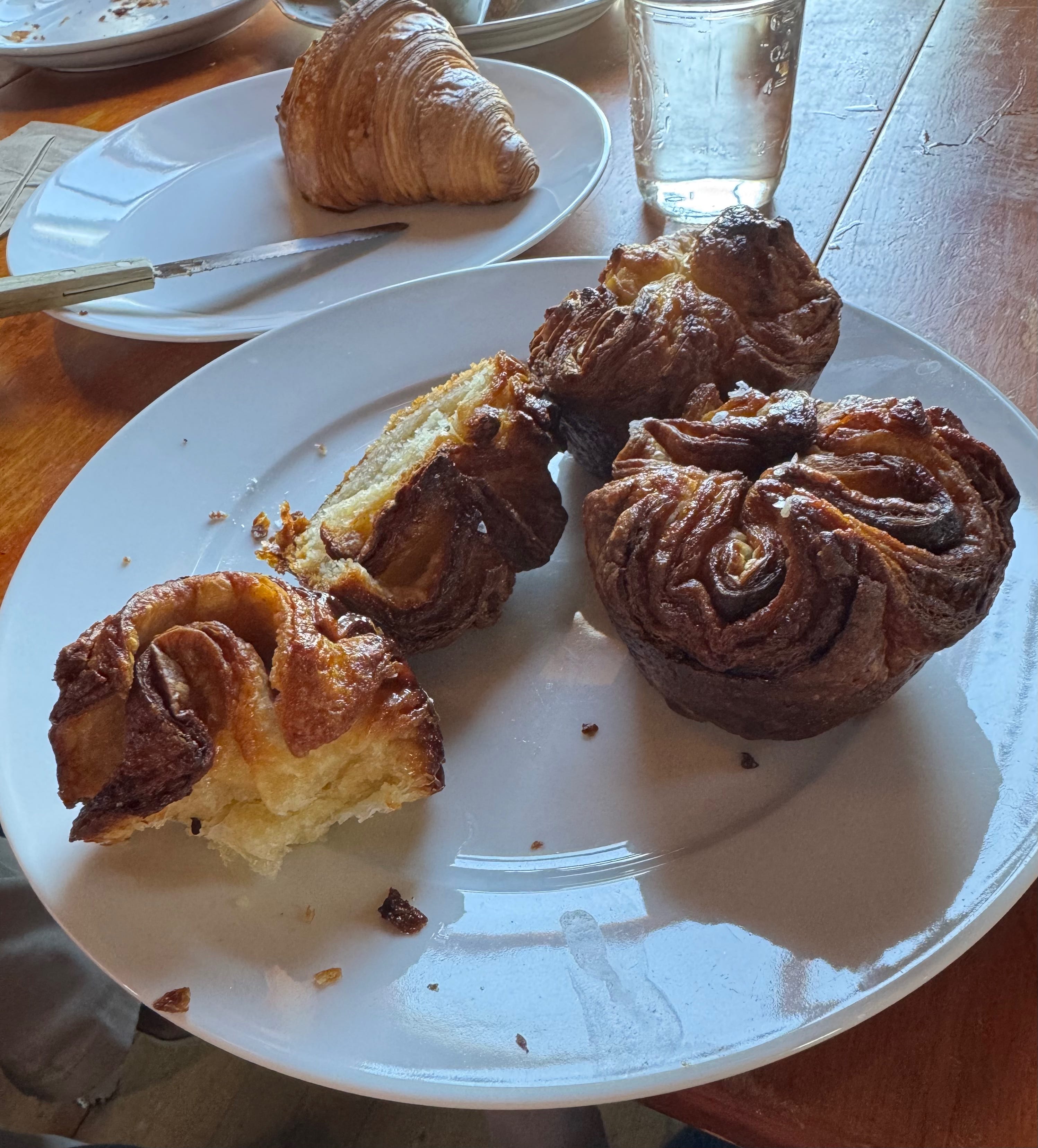
Was it worth the wait? Yes, it was. I got the very last croissant on the shelf, plus a handful of crispy, sugary, buttery kouign-amann, that Breton laminated delight that has swept the North American bakery world, plus a hefty loaf of rye bread to carry home. Settled at a table in the airy barn that’s home to Tinder Hearth, my friends and I enjoyed mugs of cappuccino and caffe-latte with the pastries and bulky slices of whole-wheat, rye, and spelt breads with sweet butter and jam to smear thick on top. And yes, I’ll say it again, it was worth the wait. And it was worth the hour and a half it took to get there in the first place.
When I was growing up in Maine, a very long time ago, bread meant soft, squishy, sliced white loaves from Nissen’s bakery--the local equivalent of what much of the rest of the country called Wonderbread. Sliced, bland, white commercial bread was okay for breakfast toast, it was useful to wrap around sandwich fillings, but otherwise it was not a constant on the family table, not in the way, as I learned much later, bread is a staple at every European meal, whether at home or in a restaurant, convent or canteen, school or (I imagine) prison. In Europe, as I learned on my travels, a meal was not a meal unless there was bread to go with it.
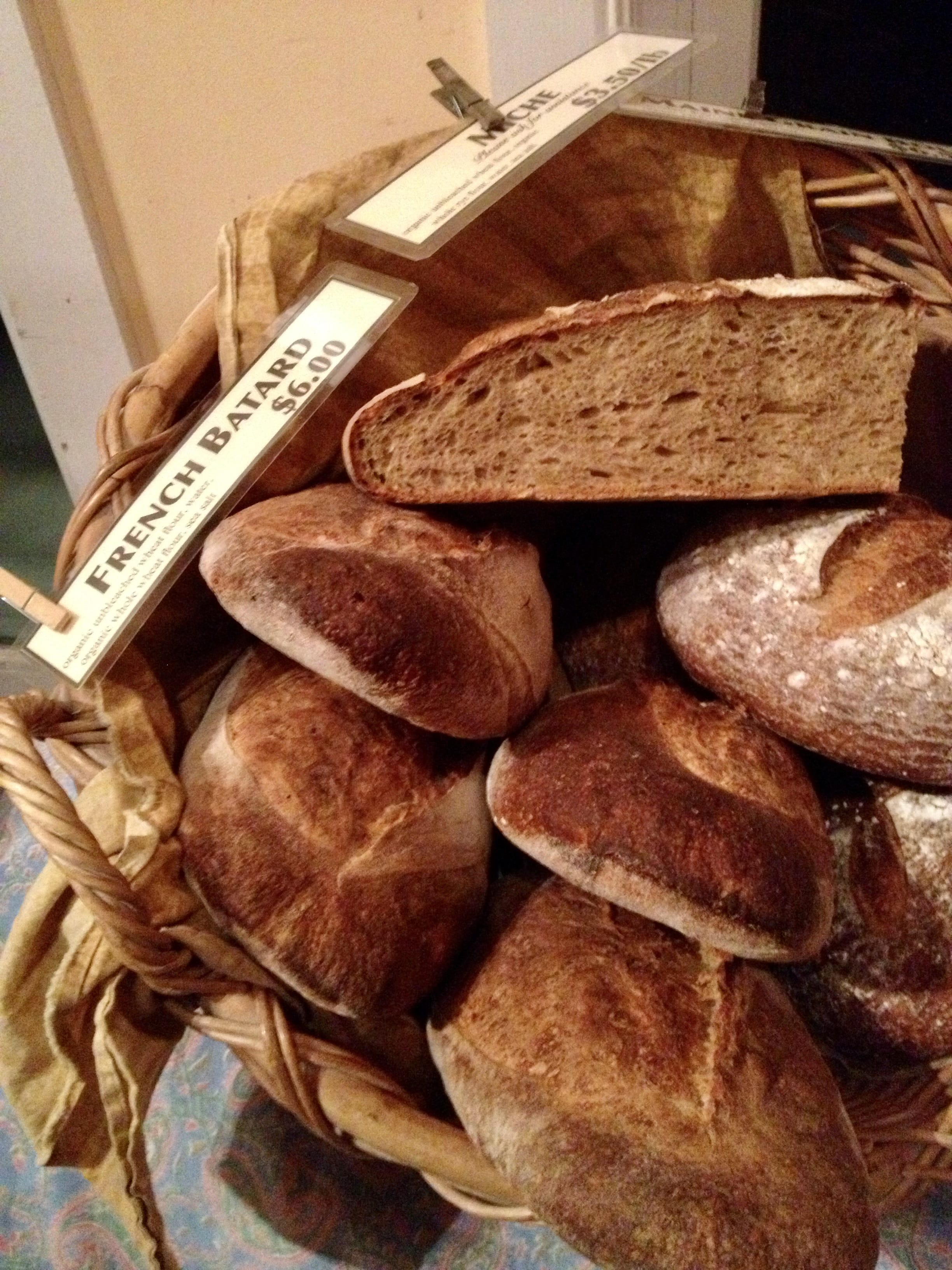
And what bread! On the outside a crisp, caramelized crust, honey-brown and redolent of roasted grain, on the inside a dense and fragrant crumb. Even the commercial, industrially produced bread in France, Italy, Germany, actually tasted of wheat or rye or barley--it actually tasted!
You can still buy Nissen-style white bread in Maine (it’s actually a favorite for split-top lobster rolls) although the John J. Nissen Company itself has disappeared, long since absorbed into a multi-national that promptly closed the company down. But the best news is this: good, wholesome, well-made, tasty, crusty, artisan-style bread is alive and well and growing in strength, spreading throughout the state.
Moreover, that kind of bread is appearing steadily on Maine tables and not just for breakfast toast, but all day long. And Maine is not alone. For those of us who grew up in the 50’s and 60’s, the change in bread culture in much of the country has been startling—and gratifying.
The Tinder Hearth story is typical of Maine bakers. It began some twenty years ago with a clay oven hand-built in the back yard of Tim Semler and Lydia Moffett in Brooksville.
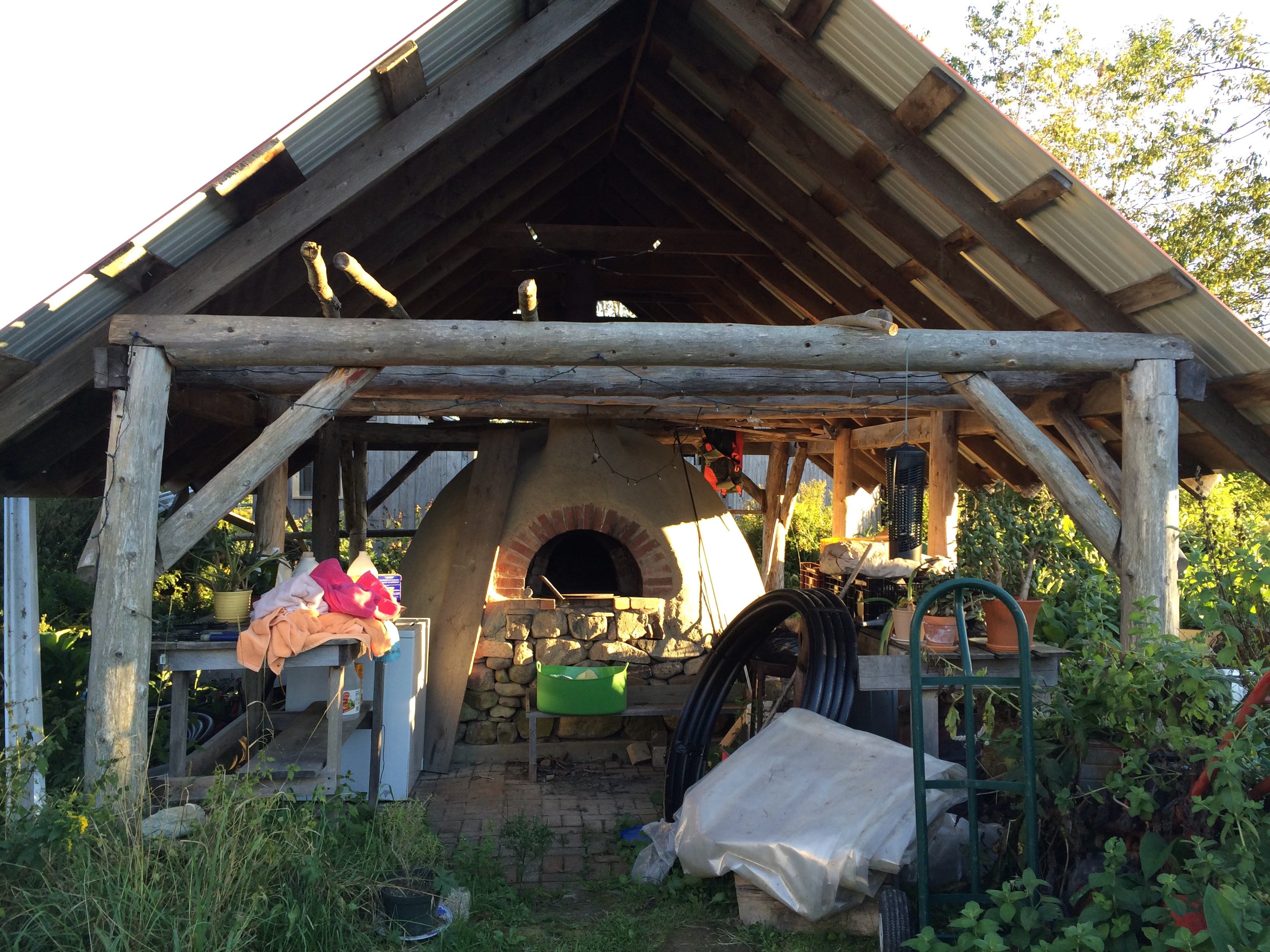
Together, the couple raised the dough, baked the bread, and carted it around to farmers’ markets to sell. Almost instant popularity quickly led to another oven which led to yet another one, a huge stone and masonry affair, also built by hand and christened Svetlana. That oven now functions as Tinder Hearth’s pizza oven (pizzas are available, carry-out or consumed on the premises, Tuesday through Friday evenings but best to check the website for times). The latest, most recent oven, an Italian wood-burner but very high-tech, with multiple decks and controls, produces an array of sourdough breads and other goods for which the bakery is distinguished. Despite its off-the-beaten-path location (see addresses below), the bakery with its café and its pizza nights, is sought by passionate bread-lovers but you can also find the bread in nearby Blue Hill at select locations such as the Blue Hill Winery and the Blue Hill Coop.
Zu Bakery
Is Tinder Hearth the best bakery in Maine? In my opinion, humble though it is, it is one of the best. Another strong contender for best in the state is Zu Bakery, a small paragon of a shop in the heart of Portland’s West End, where Barak Olins recently opened his bricks-and-mortar store, calling it a micro-boulangerie. It was eagerly anticipated by his fans (like me) who for years had to trudge each Saturday to the farmer’s market in Brunswick, the only outlet anywhere for Barak’s remarkable breads. With the shop on Clark Street, recognition has grown quickly, and just last year (2024) Zu Bakery received a prestigious accolade from the James Beard Foundation as “Outstanding Bakery” in the entire country.
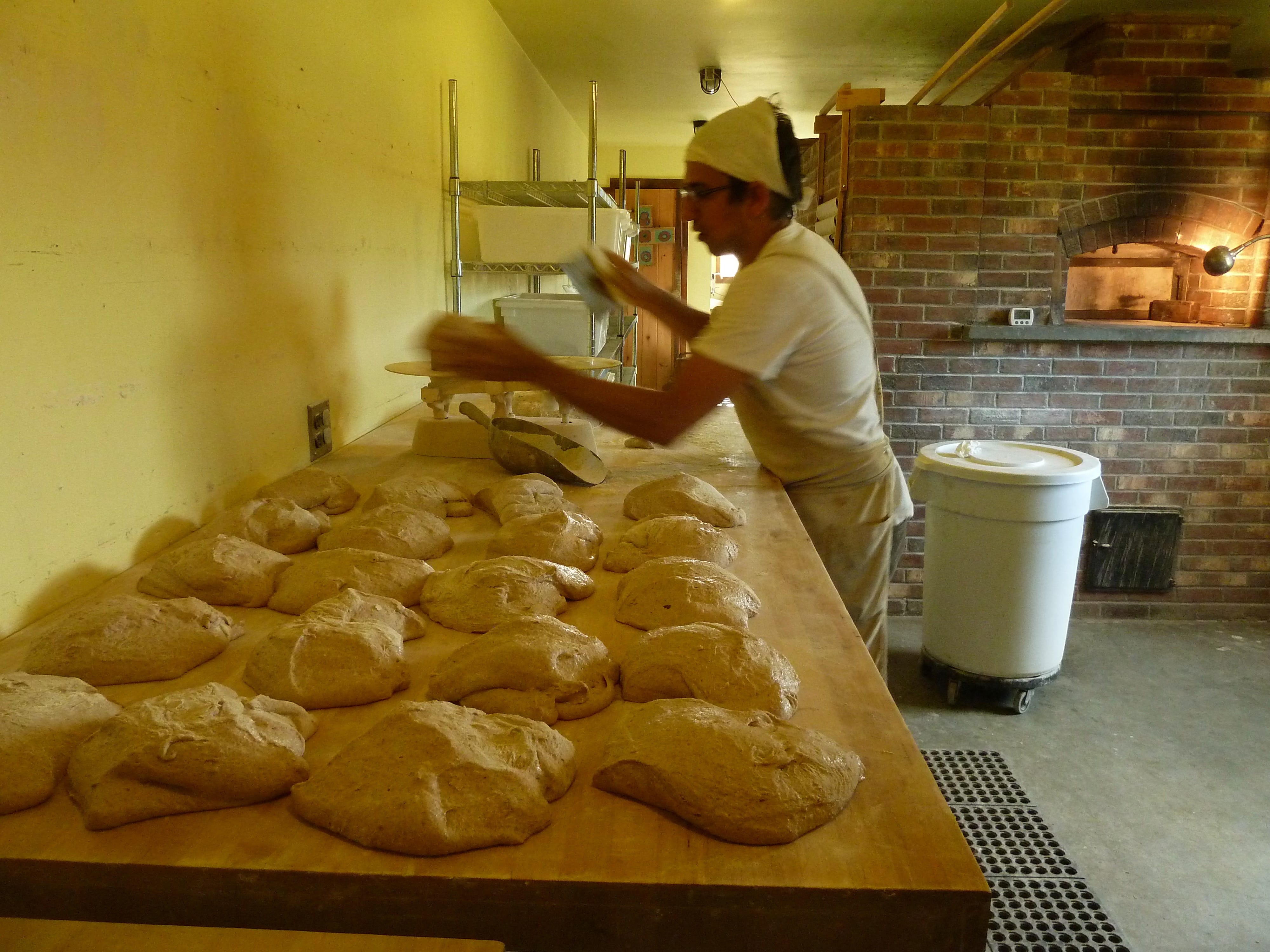
With acknowledgment, of course, the work load has increased enormously along with the growing local demand for excellent bread, made mostly with Maine-milled flour from Maine-grown grains. Does he regret giving up the farmers’ market, I asked Barak recently. It boils down to a people question. “I wanted to create a space where people come to meet,” he told me, “where we could bake continually and people can smell the aromas of the bakery and actually see us baking throughout the day.” Significantly, the Beard Award also mentioned his “connection to the community.”
Such a response, Barak explains, relates to the pandemic and the hunger it created for a kind of authenticity--real experiences of aroma and taste, and real food on the table. “For the first time, I feel Americans understand the value of bread on the table,” Barak said, “without any carb restrictions or dietary concerns --we just see and taste the real pleasure of bread at the center of the table. It makes us think about the act of eating, it lets us embrace traditions.” And then, he said, it makes the connection between his very small staff (just two or three plus his daughter who runs the cash register on weekends) and their customers: “Seeing the end results of what you do closes the gap.”
Like Zu Bakery and many others, Brazen Breads in Rockport expanded from a single stall at a seasonal market to a year-round output of breads and home-style pastries, now supplying outlets up and down the coast. Other bakers are just starting up, getting a toe-hold on what they clearly hope will be a flourishing future: Reeve Wood in Bowdoinham gave up a career as an environmental lawyer to follow a dream, building a wood-fired oven and baking Counterpoint bread in his back yard in Bowdoinham. In the rural village of Appleton where they moved (from Brooklyn of course) after the pandemic, Angelo Popolare and his wife started up Demetra Breads with an experimental sourdough bakery that has grown rapidly as word spread about its quality. Like almost all of these bakers, he uses strictly Maine-grown ingredients, including his primary component, a sourdough that is the backstay of the bakery.
But remote as some bakery locations are, Portland, not surprisingly, is still ground zero for great Maine bread, as it is for great Maine food in general. Yes, you can eat well in many parts of the state, from the rooftop to the western mountains to extremely down east, but Portland, as Maine’s largest city, with the largest economy and customer base, is a natural aggregator of good food. From bagels to baguettes, Portland boasts a surprising wealth. Standard Baking, just off Commercial Street, began setting Portland’s own standard some 30 years ago under baker Alison Pray’s expert guidance, with a wide selection of baked goods, both sweet and savory. Like most of the state’s top bakeries, Standard uses almost exclusively flours from organic grains, as much as possible milled in-state or in neighboring Québec. Night Moves, another acclaimed Portland bakery, recently moved from Biddeford in the state’s southern triangle, and Bread + Friends is a group of four bread enthusiasts who picked up stakes in San Francisco and moved to Maine during the pandemic; then there’s Scratch Bakery on Preble Street in South Portland, famous for its Montreal-style bagels among other offerings, and if it’s bagels you’re after, Rose Foods on Forrest Avenue, an outpost of Biddeford’s famed Palace Diner, produces only bagels, as far from the usual supermarket offerings as you can possibly get.
Talk with any of these bakers for very long and you soon grasp that it’s not just about home-grown grains and natural leavens and wood-fired ovens. To be a great baker, to produce great bread, like Tim Semler and Lydia Moffett at Tinder Hearth, like Barak Olins at Zu Bakery, you have to be something of a philosopher and something of an agronomist as well. “The baker,” Tim told me, while Lydia nodded in agreement, “is chopping 20 cords of wood every year, he’s baking bread that’s full of struggle and passion. I think when people eat good bread, they have to taste the struggle in it. If their senses are alive and awake, they can feel the whole story in what they taste.” And Barak Olins has moved beyond the walls of the bakery to experiment recently with a farmer friend, growing his own wheat and milling his own flour, which he believes is an essential step toward quality.
One important lesson farmers and millers in Maine have learned is that flour is not just flour any more than wheat is just wheat. The quality of the grain, whether it comes from a Scandinavian heritage cultivar or a hard red spring wheat, is determined by a lot of factors, including soil structure and climate, but also harvest methods and post-harvest treatment. If bakers had a learning curve, farmers had even more of one since bread grains had long since disappeared from most Maine farmers’ fields. The revival of small-grain-growing has been as impressive as the revival of old-fashioned bread-making and the two, clearly, go hand in hand.
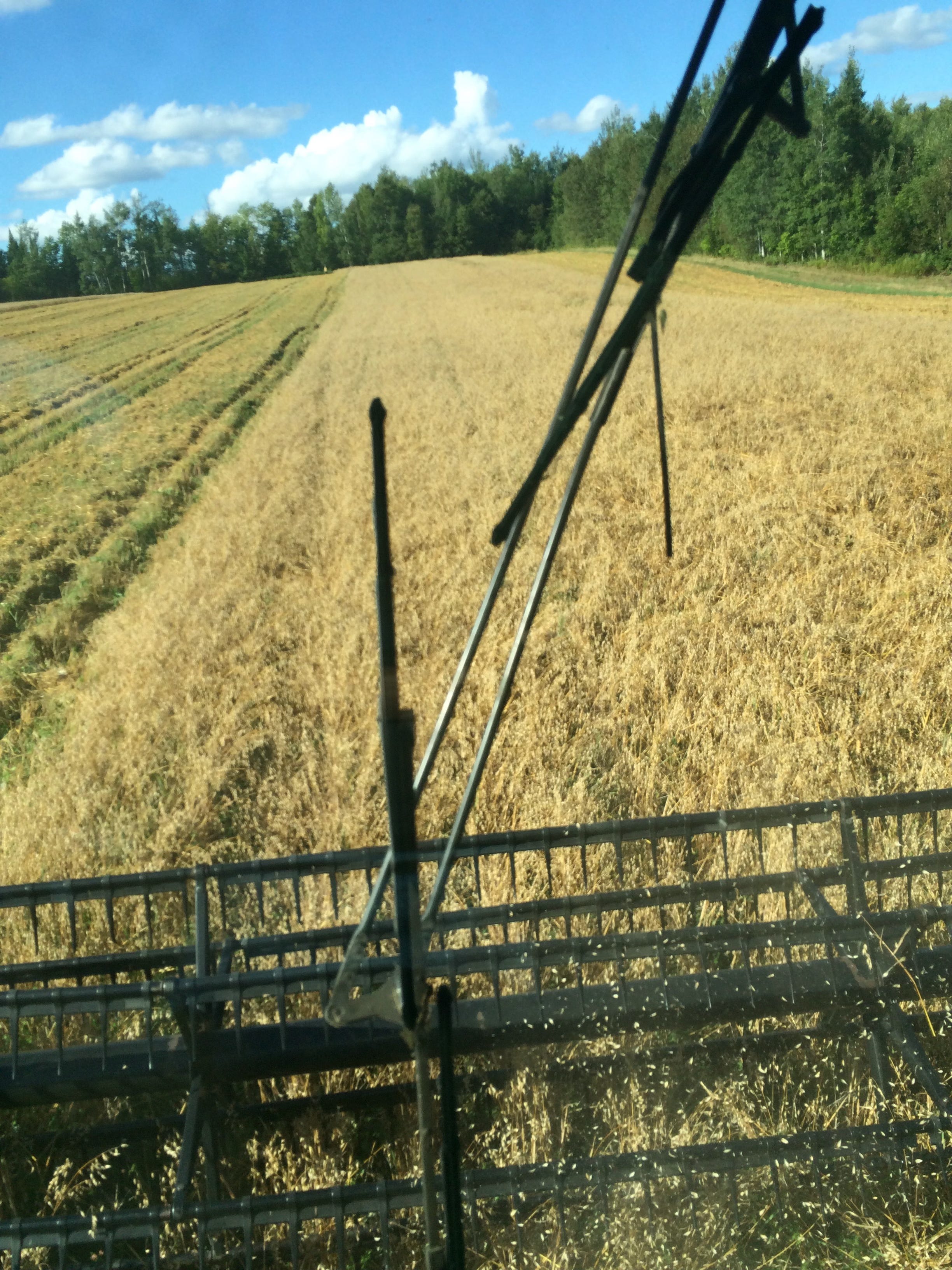
What’s behind it all is a variety of factors, one of which was Jim Amaral’s search for Maine wheat for his Borealis breads. In the end he too had to partner with a Maine farmer, Matt Williams, who was willing to experiment with what was in essence a lost crop in Maine. But another factor behind the surge in grain-growing and bread-making has been the impact of the Kneading Conference, an inspirational effort on the part of a soft-spoken but determined woman named Amber Lambke, who organized the first such event in Skowhegan back in 2007. Her goal was to revitalize her town’s decaying downtown and her inspiration was to bring together bakers, brewers, farmers, millers, and the food-loving public with its insatiable desire for locally grown and locally produced food. Each year, the Kneading Conference presents a concatenation of events, a gathering of knowledge that provides advice, including lots of hands-on demonstrations, about everything from what to do with leftover sourdough, to how to set up and operate an industrially sized grist mill, to the construction of a backyard wood-fired oven, to the properties of recently sourced heritage grains from Scandinavia. Or Ethiopia. Or South America. In brief, it’s an old-fashioned Whole Earth Catalog, but animated in real time and totally focused on grains. It’s not a stretch to call the Kneading Conference the spearhead of a movement, with an impact far beyond that jar of sourdough in your refrigerator
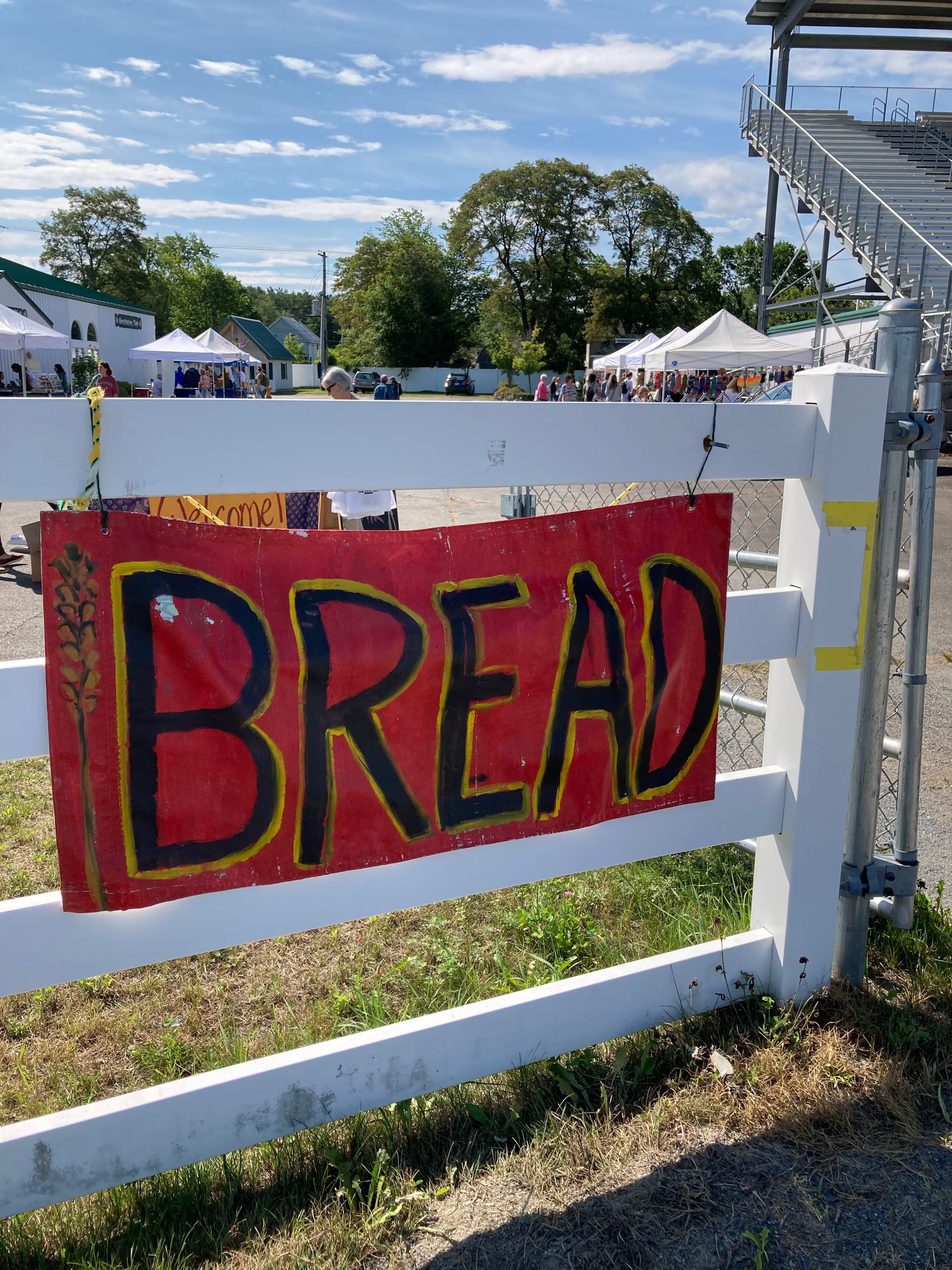
A few years ago, I asked Tinder Hearth’s Tim Semler if he and Lydia were part of a Maine bread revival. His answer? “Revival?” he said, “no, rediscovery.”
Back then, Tinder Hearth breads, like those in most Maine artisanal bakeries, were made with flour from away, as we say around here. Much of it was high-quality and one supplier stood out, La Milanaise, a deservedly famous producer of organic flour just across the border in Lac-Mégantic, Québec. These days, most Maine bakeries, including Tinder Hearth, Zu Bakery, and the others I’ve mentioned, have happily converted to Maine grains and Maine flours, now produced with the quality and consistency that fine bakers demand.
And that’s not the end of a remarkable story. Whether revival or rediscovery or something else entirely, the saga of bread, from the wheat in the field to the turning stones of the grist mill to the fragrance of natural yeasts and the perfume of fresh flour to the excitement of the crisp loaves emerging from the oven, is an ongoing process, one that has no end, as it has no beginning but simply goes on, a wheel that turns and spins, slowly, softly, nourishing us all.
Tinder Hearth: https://www.tinderhearth.com; 1452 Coastal Road, Brooksville, ME; (207) 326-8381
Zu Bakery: http://www.zubakery.com; 81 Clark Street, Portland, ME; (207) 409-0117
Standard Baking: https://standardbakingco.com; 75 Commercial Street, Portland ME; (207) 773-2112
Night Moves Bread: https://nightmovesbread.com; 695 Broadway, South Portland ME; (207) 805-1011
Bread + Friends: https://breadandfriendsmaine.com; 505 Fore Street, Portland, ME; (207) 536-4399
Scratch Baking: https://www.scratchbakingco.com; 416 Preble Street, South Portland ME; (207) 799-0668
Borealis Breads: https://www.borealisbreads.com; in several locations and distributed through many retail outlets throughout Maine
Rose Foods: https://www.rosefoods.me; 428 Forest Avenue, Portland ME; (207) 835-0991
Brazen Breads: https://www.brazenbaking.com; baked in Rockport, available in farmers markets in Rockland, Camden, Belfast, and in retail outlets throughout the Midcoast
Demetra: https://www.demetrabread.com; baked in Appleton, widely available in retail outlets throughout the Midcoast
Counterpoint: https://counterpointbread.square.site; https://www.facebook.com/Counterpoint/about; baked in Bowdoinham, available in farmer’s markets in the Brunswick-Bowdoinham region
Really enjoyed this piece, Nancy. It makes me want to jump in the car to tour and support these remarkable bakers and stewards of good bread making. I hope to do so later this summer and will be tucking this list away. I've already made sure my rental will allow me to make the Tinder Hearth line early AM.
What a delightful reveal of all things bakery in Portland! I can hardly wait to visit and come home with fabulous bread. As always, many thanks!