Buying the Farm
Getting and spending in the Tuscan countryside

If you like this—and I hope you do—please show your affection by tapping that little heart in the upper left corner.
NB: I call my Tuscan village Montanare which is unrelated to its actual name. This is to protect the identity of the community itself and the privacy of the people who lived there, many of whom are still there to this day. I could just call it X but it seems humiliating for a place I’ve loved and cherished. Montanare it shall be. I offer this piece, slightly edited from what I wrote a few years ago, because it’s possibly the introduction to a book I’m working on.
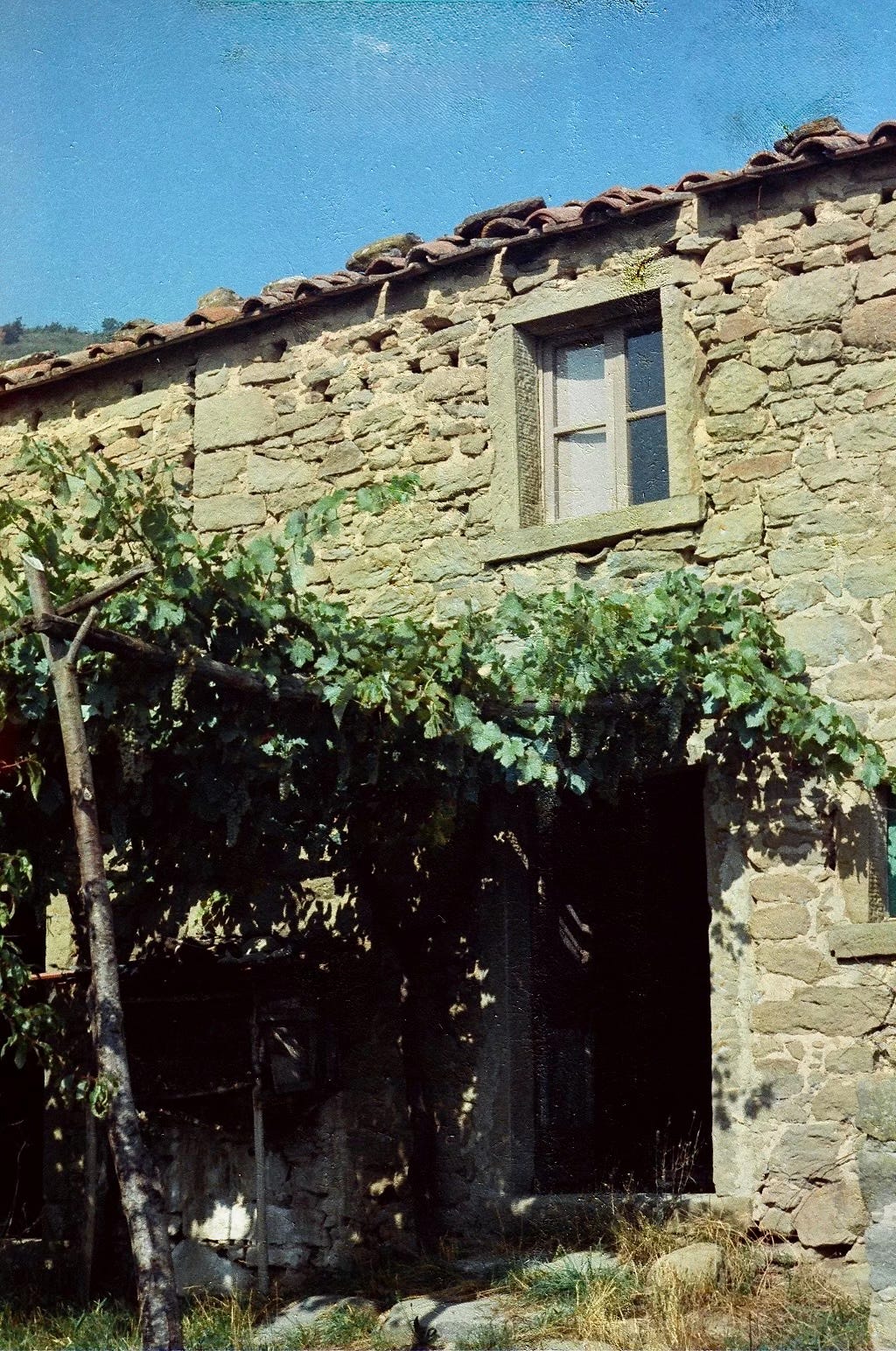
Back in 1972, more than half a century ago, together with my then husband, I paid the equivalent in Italian lire of about $5,000 and thereby gained possession of a tumbled down stone cottage and a plot of land measuring ten hectares (25 acres) in a remote Tuscan mountain community that I call Montanare. How, I am sometimes asked, were we able to do that?
The reason is simple: All over Tuscany in the 1960’s and ‘70’s the contadini, peasant farmers, were abandoning the land, fleeing the countryside and flocking to towns and cities where work was available, tough work, yes, but not as tough as hoeing a living from the stony, unyielding ground of these mountains. Furthermore, at the end of the month the worker went home with a busta paga, a paycheck, something no farmer would ever see.
I have to pause for a small but critical Italian history lesson here. Tuscany, since at least the 13th century and possibly as long ago as the ninth, that is, for a thousand years or more, was the home to an economic system called mezzadria. (It existed in other parts of central and northern Italy too, but it was so endemic in Tuscany that in the early 20thcentury, almost half of all Tuscan farmland still operated under this system.) Mezzadria was a form of share cropping that made sense, at least superficially. The land owner, the padrone, owned the fields and the housing, and supplied the seeds and the necessary if rudimentary equipment to farm the land, in return for which the mezzadro or contadino, the peasant farmer, supplied the labor. The landlord received half of everything that was produced--half the wheat, half the wine, half the oil, half the lettuces and eggs and tomatoes, and when a ewe produced two lambs, the landlord got one. And if, as sometimes happened, the ewe produced only one lamb, the landlord, the padrone, got it, along with half the beans even when there were only enough beans to keep the contadino’s family fed throughout the winter. You get the picture. If superficially mezzadria made sense, in practice, in actuality, it was profoundly unjust. Moreover, it was self-perpetuating over the centuries.
So that was mezzadria. The word comes from Latin medius, Italian mezzo, meaning half. In the best of cases, the padroni worked closely with their mezzadri, their contadini, to determine what would be cultivated, grown, and harvested. If you’ve read Iris Origo’s War in Val d’Orcia or A Chill in the Air, you will understand mezzadria as Marchesa Origo did. She and her husband worked diligently with the peasant farmers who lived on their land, improving farming methods and enhancing the lives of the men, women, and children, establishing schools, promoting literacy, developing up-to-date sanitation systems, and so forth. These were the families, often multi-generational, who lived at La Foce, the Origos’ 4,000-acre estate in the hill country south of Siena. But the Origos were an exception. More often, one hears of very different situations, padroni who were strict masters, rigid in their demands (taking the fattest chickens, the best of the wheat for instance), treating the contadini as serfs and fearfully resisting any changes or improvements, any reforms that might disturb the waters and possibly induce the contadini to rebel, perhaps to overthrow the system.
Eventually this deeply unfair but deeply embedded situation had to change, and as Italy picked itself up from the ruins of World War II and the Fascist decades, a great wave of reform swept over the country. At that point, large estates were broken up and farming shifted from local subsistence economies, family-centered and based on sharecropping, to modern consumer-based, market-driven agricultural capitalism. Interestingly, the surge in production of high-quality Tuscan wines and extra-virgin olive oil can be dated to this same period and for many of the same reasons. A contadino might make a first-class vino rosso but he could never produce enough of it to satisfy his family and his padrone, as well as a distant national or international market. Consolidation of land, new ideas about wine-making, broader outreach, and fresh infusions of cash helped to make the difference.
But the upshot was that Tuscans, along with a great number of other rural Italians, left their farms in droves, deserted them, moved away.
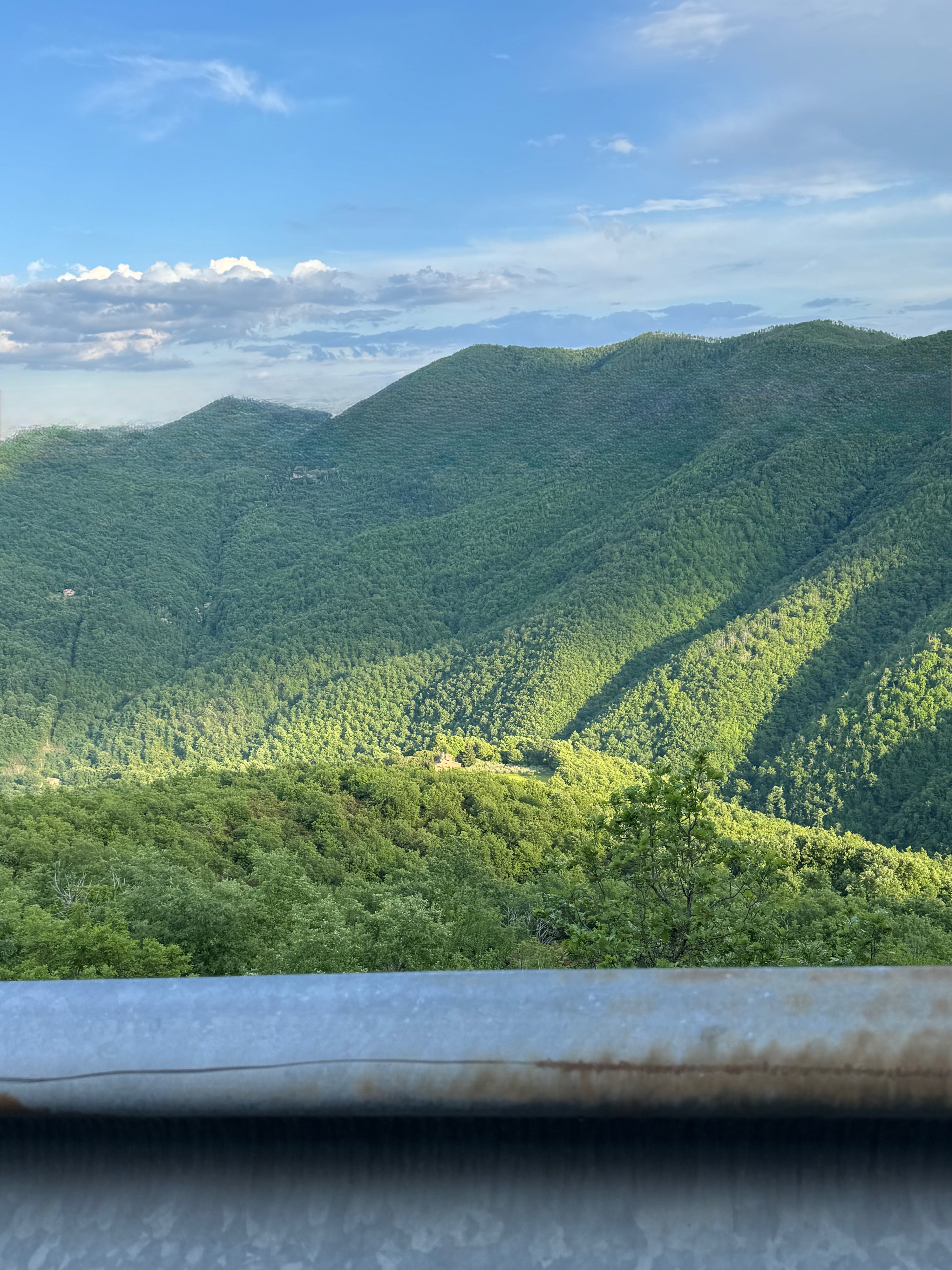
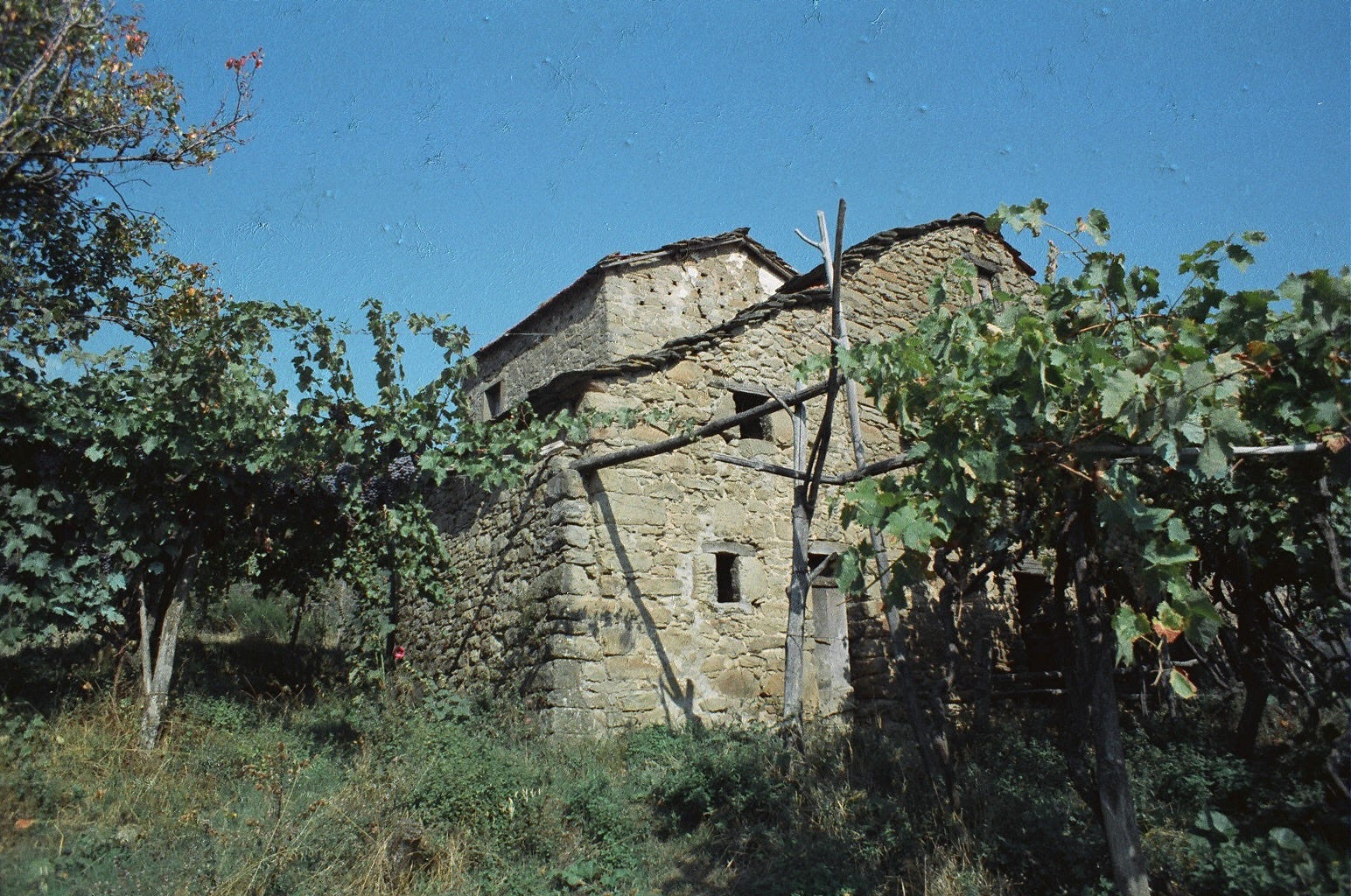
And that’s how my family came to buy one of those deserted farms, 25 acres of steep, rocky, heavily forested land with a tumble-down farmhouse, for a mere $5,000. Even half a century ago, that was pretty astonishing. A knowledgeable Italian friend, a prosperous fruit and vegetable farmer with roots deep in the rich soil of the Po valley, was astonished: “I would not believe that anywhere in Italy,” he said, “you could find ten hectares of land at that price.”
Montanare is still to this day a very small hamlet, the center of a series of even smaller communities stretching out below the old Roman road along the ridge line of the montagna cortonese, the hills east of Cortona. Despite its size, like similar rural communities around the world, it’s packed with stories, with a history that goes back generations, incorporating incest, murder, rape, internecine feuds, and romances that blossomed into long-standing love affairs. Communities like Montanare--and larger ones, even much larger ones, like Arezzo and Siena and Florence--illustrate what Italians call campanilismo, a kind of tribal loyalty to the local community, defined as including those close enough to hear the bells of the local campanile, the church tower. Loyalty goes first to the family, then to the folks within the sound of the bells, only then to the region, and way, way down the list to the nation itself. In fact, the people we outsiders call Italians are far more likely to call themselves Romans or Venetians or Sicilians or whatever. Here in Montanare, within a few kilometers of the Umbrian border, my neighbors are quick to describe themselves as Tuscan. Their dialect is Tuscan, their cooking is Tuscan, and their values are Tuscan too.
An example: Nita, my next-farm neighbor, resisted sending her tiny granddaughter to school in Cortona. “It’s too far,” she said, “too long to spend on the bus.” I suggested the asilo, the nursery school, down the valley in the next village which was only a few miles away. “No,” said Nita, “it’s in Umbria. She’d start talking like an Umbrian, quack-quack-quack. I can’t have that.”
Not everyone in Montanare was a contadino, share-cropping someone else’s land. Most of my neighbors actually farmed their own small fields and logged their own woodlots. But the farm we acquired, which was called Pian d’Arcello in the catasto records in Cortona, had indeed been part of a larger holding and had operated traditionally under mezzadria. Gianfranco Valentini, from whom we bought the place, had inherited it along with other properties when his father passed away years earlier. Franco himself, however, had only a peripheral interest in farming. Movie star handsome, with an engaging smile, he was actually a high-priced veterinarian with a fancy clinic in Rome’s Piazza Navona where, it was said, he had treated Elizabeth Taylor’s dogs during the filming of Cleopatra. His estate was small but comfortable; it included the main house, the casa padronale, where he lived when he was up from Rome on holiday, and three smaller stone cottages with adjacent fields, widely dispersed across the mountainside; one of these would become ours but only after days of intense negotiation, with an American friend doing the translating.
The American friend was the reason my husband and I had come to this remote place. A few years earlier Bart and his wife Nonie, expatriate Americans, had bought a similar small, no longer productive farm in Montanare; when we came to visit they were hard at work on the necessary reconstruction. “Everything is for sale,” Bart reported, and he was right. That first afternoon, when we arrived, he pointed from the lawn in front of his house, indicating with his wine glass at least four properties on the broad slope of the mountain facing us. “And around that ridge,” he said, “there’s a whole village for sale.”
Most of these were not properties that had been in mezzadria—the land was too poor, the village too isolated, for anything substantive. But Franco Valentini was a proper padrone, albeit small-scale. By the time we arrived on the scene, however, there were very few contadini left to do the work on his holdings. Which was one reason why he was selling them off to apparently rich foreigners like us.
But there was another reason: With an advanced degree in veterinary medicine, even though he mostly occupied himself with the health of fancy pets of fancy Romans (and very fancy film stars), Franco had decided to invest in the scientific raising of pigs. He was in the process of constructing a large, extensive pig barn on his padronal property. The outside walls had already been painted an incandescent pink, so bright you could pick it out from across the mountain. All that was needed now were the young pigs to occupy it. And he needed money to finance the operation.
It was a time when, it seemed, all over the western world 60’s rebels had turned away from politics and were heading, in the words of the era, back to the land. It was the heyday of The Whole Earth Catalog, which we studied religiously, and of communes of religious or ethical or environmental inspiration, rising and falling with the tides of enthusiasm. In Maine the Nearings were preaching self-sufficiency, sustainability, and what they called the good life, living close to the land, building your own stone walls, growing at least your own parsley, sage, rosemary and thyme, if not grains, beans, and vegetables.
And what better place to accomplish that, it seemed to me, than a remote Tuscan village, 20 kilometers from the nearest town over a steep and curving mountain road? Here in Montanare, fresh water was supplied by wells and clear mountain springs, heat came from fireplaces stoked from the farmer’s own woodlot, electricity was available but only to houses directly on the communal highway, phone service was restricted to the local bottega, and food for the most part was produced, grown, and harvested right on the farm, including meat from pigs, chickens, rabbits, and a few small flocks of sheep. Even the flour, the wine, the olive oil, those Mediterranean staples, were the result of unstinting efforts by local farmers to produce a local supply.
And so we set to negotiating with Franco Valentini, with our American friend translating while a mysterious local man sat alongside us. He was Bruno, one of many Brunos in a village where every second man seemed to bear that name. Our Bruno said nothing but observed it all as he chewed on a length of straw. On those balmy late-spring afternoons we sat outside beneath the shade trees in Franco’s yard and worked toward a settlement. We talked about the acreage, the barely accessible dirt track that led to our stone hovel, the need for water (electricity would not enter the picture for many years more). Together we argued in a pleasant but guarded way over whether we would pay $4,000 (our figure) or $6,000 (Franco’s request). And at the end of that time, Bruno, who had so far been a silent witness to all our discussions, spat out his straw, pushed back his greasy fedora, leaned in and seized Franco’s hand and that of my husband, brought them together with his own two hands wrapped around them, raised and lowered them rapidly three times, and droned or rather chanted: “Uno, due, tre, fatto!: One-two-three and it’s done.”
And we had the place for $5,000 or the equivalent, about 3 million Italian lire. And that single gesture set me on a path that I had never anticipated, and a love affair with a countryside and a culture that would only reveal itself in small, steady glimpses over the course of the next thirty, forty, fifty years. A year ago I made what I now realize would be my last time in Montanare and although I ache to be back there, reality, the reality of aging, of the difficulty of travel, of the impossibility of living in a three-story stone farmhouse all by myself at a distance of some 30 kilometers from the nearest ER, all that governs my life now and so I call up memories, which is what this story is about.
And this particular Bruno, with his old fedora and his perpetual blade of grass to chew on, it turned out, asI learned much later, he was a sensale, a traditional (but not official) mediator, a go-between whose role and function goes back over centuries and most likely at this late date exists in very few, very remote parts of Italy. I will tell you all about that another time.
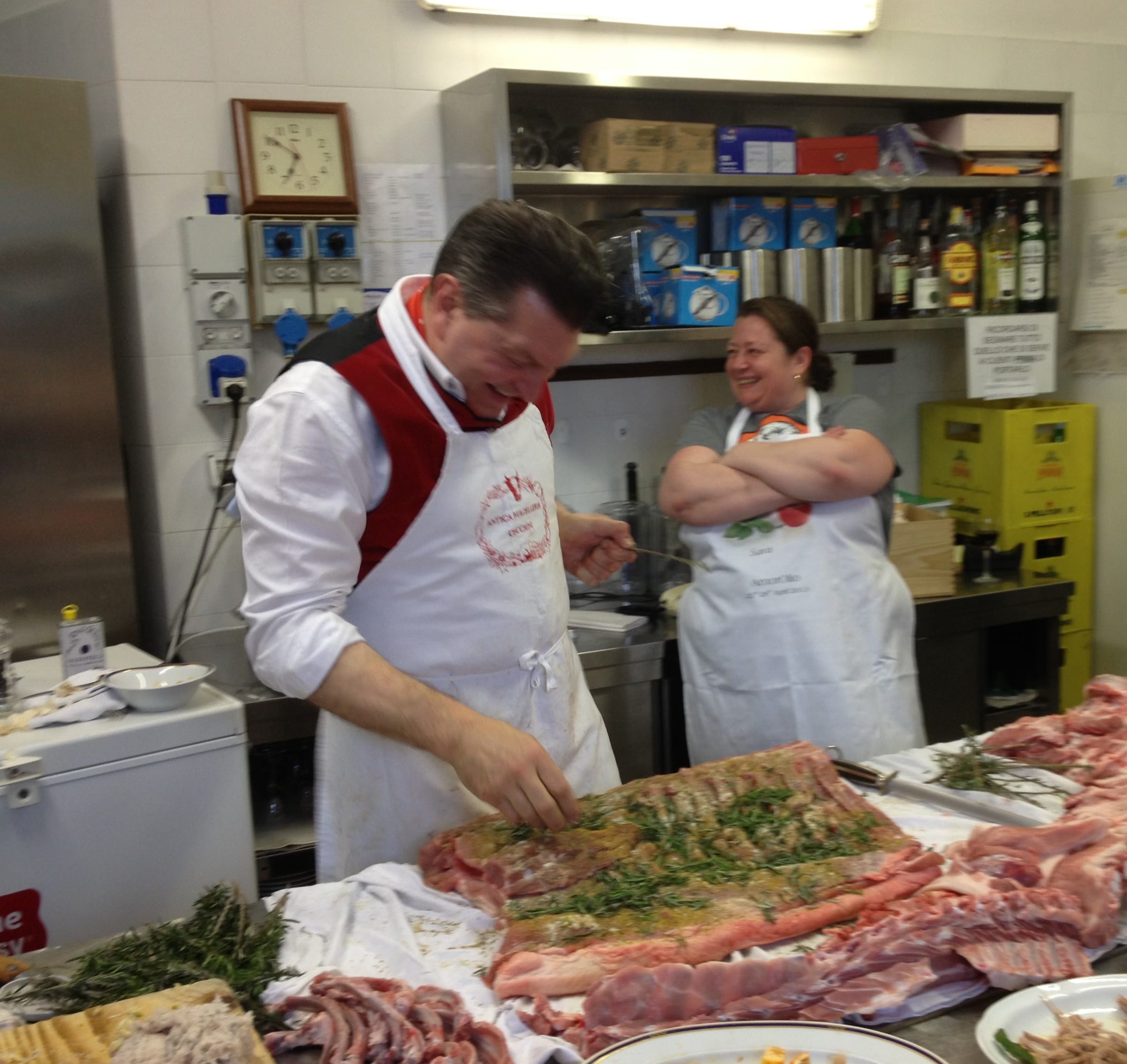
Several years later, after we had restored the tumble-down cottage into a more reasonable place to live with our two small children, we celebrated its completion with a festa to which the entire village was invited, along with all the workers, and all the foreign residents who, like us, sensing a bargain, had seeped into the valley in the meantime. At the festa, of course, we served the traditional Tuscan treat for such occasions, a handsome porchetta, made from a whole young pig and prepared by Amerigo, a local lad who roasted pigs in his wood-burning oven and then drove a porchetta-laden food truck around from market to market on a weekly rotation, serving hearty slabs of meat to hungry shoppers. Here I offer a recipe for a similar treatment. It is not the same as the traditional porchetta, which should be stuffed with the pig’s liver and masses of garlic, bayleaves, and wild fennel pollen, then slowly roasted overnight in a wood-fired oven, but it’s as close as you might get in a modern American kitchen.
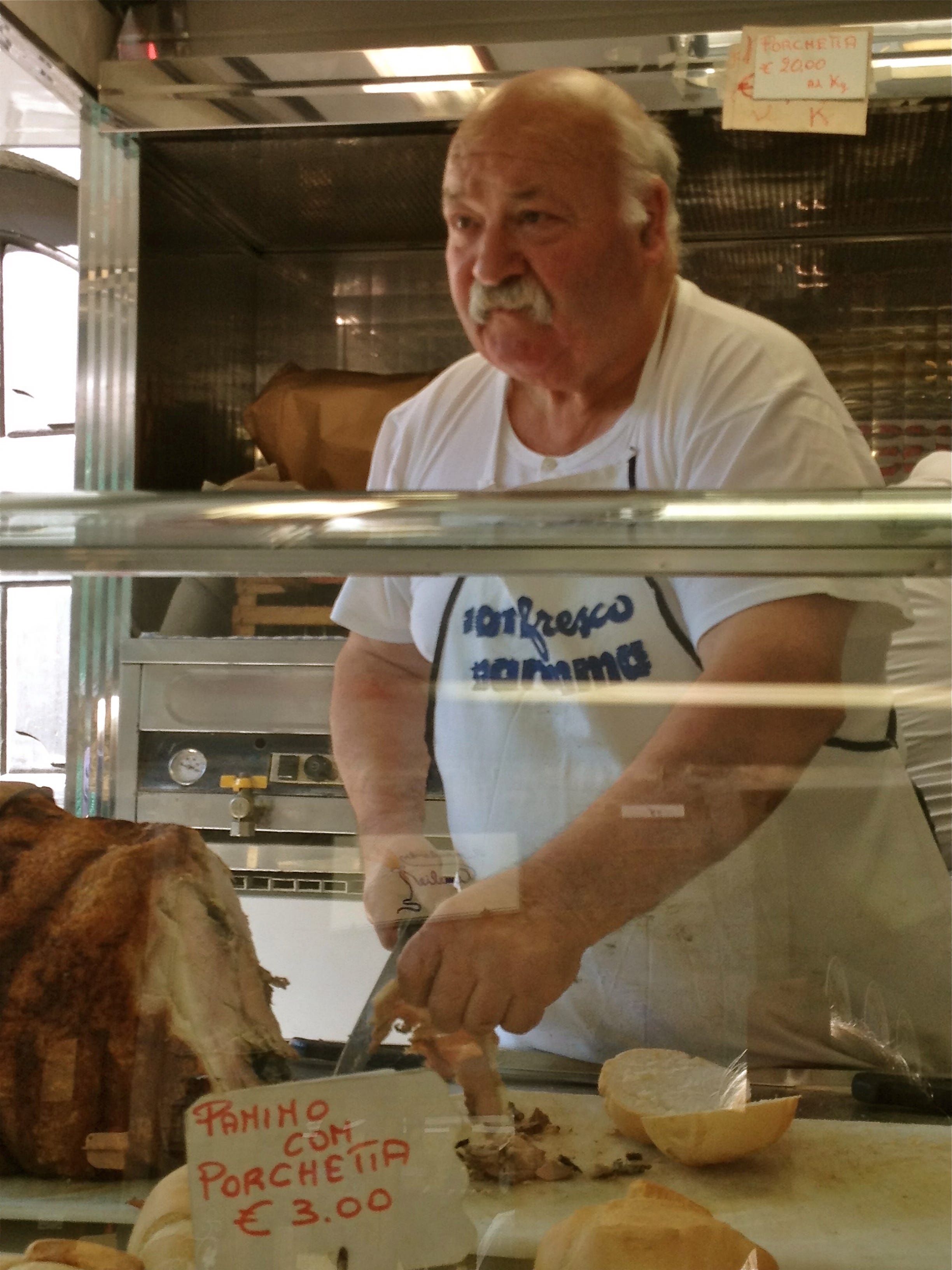
The recipe below, I want to stress, is not for an authentic porchetta but it will give you a sense of the possibilities. The seductive fragrance of wild fennel, garlic, and bayleaf are what’s important. As for the cut of meat, pork belly—it is not, I assure you, the stomach of the pig but rather the paunch or flank, the undercut of the animal from which pancetta and often bacon is made. This is a delicious cut because its layers of fat and lean, like the layers of puff pastry, lend considerable flavor and fragrance to the meat. You might not find pork belly in a standard American supermarket where everything comes precut and pre-wrapped, but if you don’t have a specialty butcher, look for a Chinese or other Asian market. Butchers in Asian neighborhoods will offer the cut with the skin, sometimes called the rind, attached, and that’s important. If the belly comes with rib bones, have them removed or remove them yourself, an easy chore at home, and add them to the stock pot.
If pork belly is not available, the recipe works just as well with a pork shoulder or butt, but be sure to have the outside rind or skin left on. That, roasted to a crisp crackling, is what gives porchetta its seductive crunch. In Italy, pork liver, chopped in savory chunks, is also added but that is almost impossible to find in American markets. I sometimes substitute chicken livers, but you could also omit the livers entirely if you wish.
Fennel pollen is much easier to find online than it was when I first started trying to recreate Tuscan recipes in the U.S. It is expensive but necessary for that true Tuscan flavor and a little goes a long way. In a pinch, you could substitute more widely available fennel seeds but the pollen has a distinctive warmth and roundness of aroma that the sharp-scented seeds lack. Market Hall Foods in Oakland offers wild fennel pollen straight from Tuscany, but with a little online searching you might be able to source a local product since wild fennel does indeed grow along California roadsides.